- +1 (469) 662-5248
- info@smartstoneconsultingllc.com
- Mon - Fri: 9:00 - 18:30
CEMENT & LIME STABILIZATION CONTRACTOR IN TEXAS
Weak subgrade soils are one of the main reasons pavement fails early. We treat them with cement or lime to add strength and stability before paving, so the pavement above performs as designed. It’s a practical first step on Texas job sites where the native soil needs help.
Cement or lime mixed into the subgrade to improve how it behaves.
A more stable base for pavement and slabs.
A firm foundation reduces movement under load.
The treated layer is compacted and finished for the next phase.
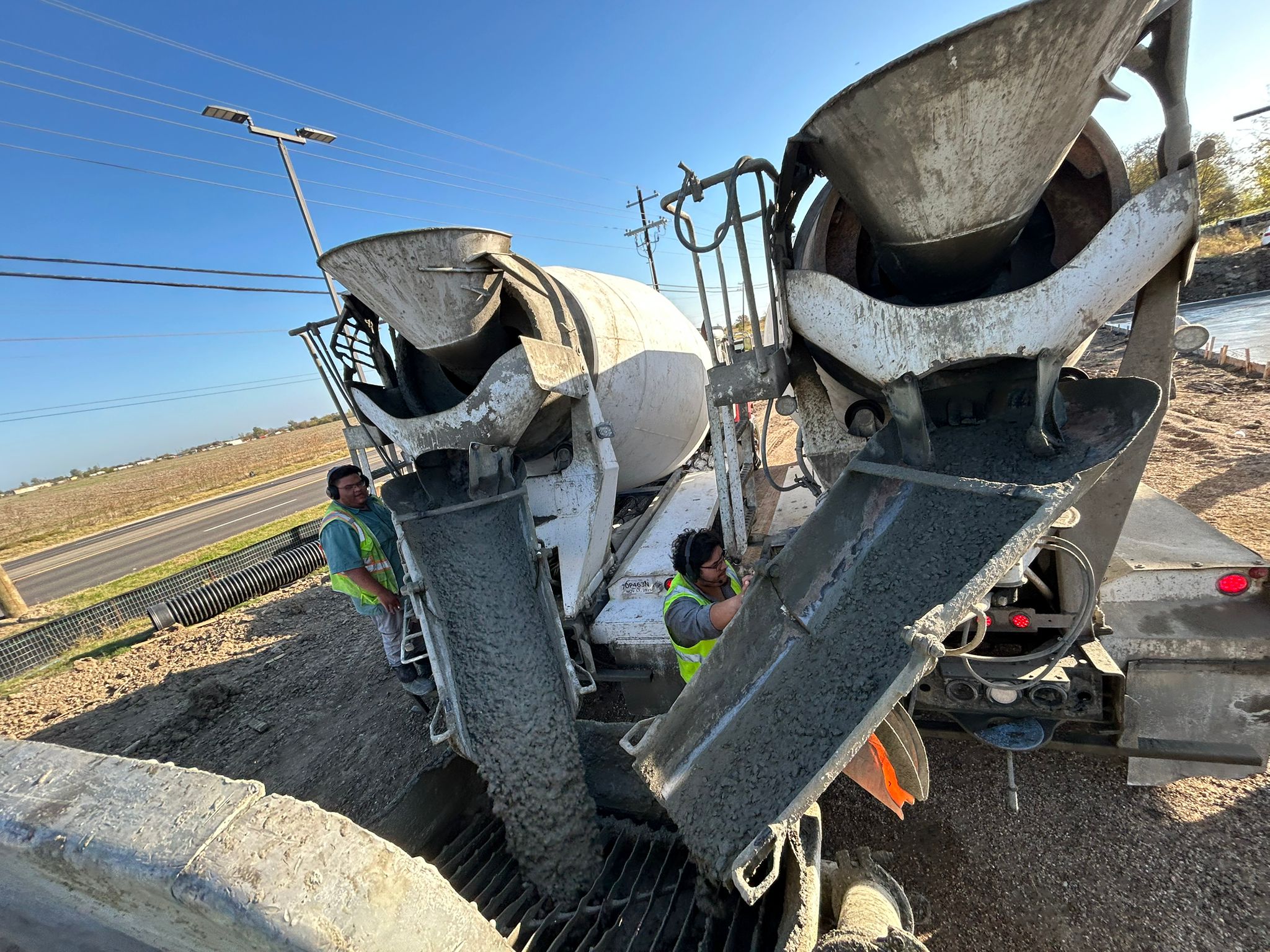
At Smart Concrete, our cement and lime stabilization process begins with evaluating soil conditions, reviewing geotechnical recommendations and determining the appropriate stabilizing agent and application rate. We prepare the treatment area by pulverizing the existing soil and adjusting its moisture content as needed. Cement or lime is then spread uniformly across the specified area and mixed into the soil to the required depth using specialized stabilization equipment. Water is added as necessary to achieve the proper moisture content for compaction and treatment. The blended material is then compacted to meet project density requirements and graded to the specified elevations and slopes. For lime-treated soils, the process may also include a designated mellowing period and additional mixing, while cement-treated soils are compacted and finished within the required working time. Throughout the process, we focus on uniform mixing, moisture control, compaction and quality verification to create a stable, durable subgrade ready for pavement construction.
01
Soil conditions and project requirements guide the treatment.
02
Cement or lime is spread and mixed into the soil.
03
The stabilized layer is compacted and graded.
When the native soil is too soft or unstable to support pavement or slabs. Stabilizing the subgrade is often more reliable than working around poor soil.
Cement and lime stabilization are soil improvement techniques that enhance the strength, stability, and performance of existing soils. Cement is commonly used to increase strength and stiffness, while lime helps improve the workability and engineering properties of suitable clay-rich soils.
Soil stabilization may be needed when the existing soil is weak, highly plastic, moisture-sensitive, or unable to provide adequate support for the planned construction. It can help improve subgrades for roads, parking lots, industrial facilities, and other pavement projects.
Cement stabilization is generally used to increase soil strength and stiffness, particularly in suitable granular and cohesive soils. Lime stabilization is often effective for clay-rich soils, helping reduce plasticity, improve workability, and control moisture sensitivity. The best treatment depends on soil composition and laboratory testing.
The process typically involves evaluating the soil, preparing the site, spreading the appropriate stabilizing agent, mixing it thoroughly with the soil, adjusting moisture content, and compacting the treated material. Proper curing and quality control help ensure the stabilized layer meets project specifications.
Soil stabilization can improve bearing capacity, reduce soil plasticity and moisture-related movement, increase durability, and create a more reliable pavement subgrade. Depending on site conditions and project design, it may also reduce the need to excavate and replace unsuitable soil, helping control construction costs.
Smart Concrete serves property owners, developers and contractors across Texas and the surrounding region, including:
Improve soil strength, enhance ground stability, and create a reliable foundation for long-lasting pavement and construction projects with professional cement and lime stabilization.
© 2026 All Rights Reserved.